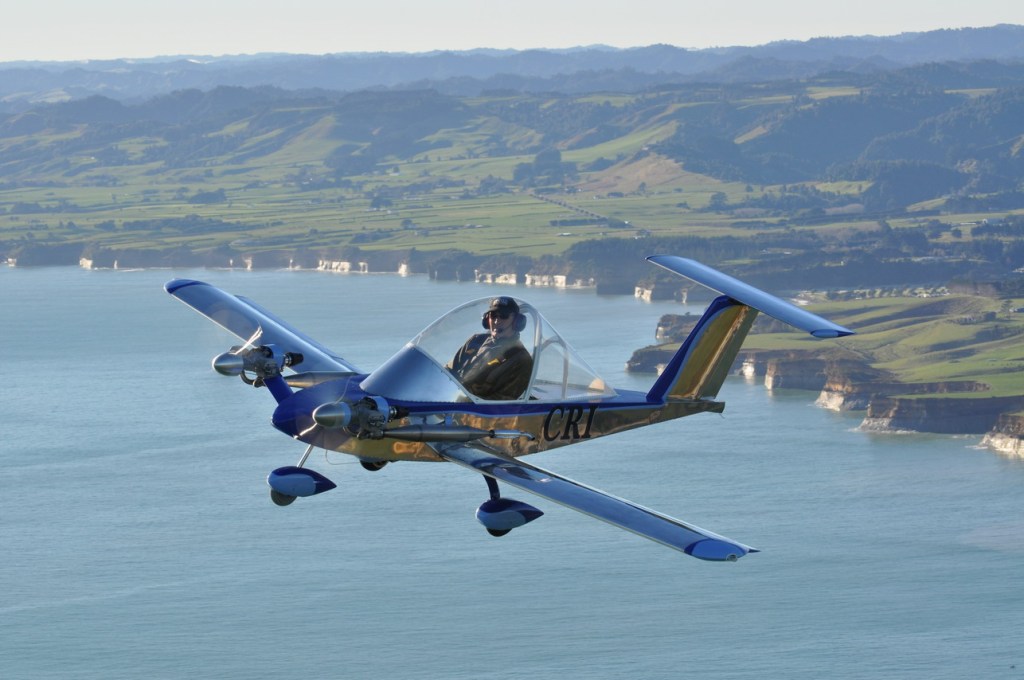
Typical Flight
To outline a typical flight, after the aircraft is fuelled to
around 18 litres ( of 23 for a full tank) the aircraft is
gentled pushed out of the hanger onto to grass berm. This gives
a AUW of 370 lbs – close to MAUW of 375 lbs.
Pre-flight, I pay particular attention to tyre pressures, all
visible fasteners, security of nose cone, and double check of
wing pins and aileron attachments. I carefully check the canopy
attachments, seat attachments and seat belt attachments. All
these items are as light as could be – and any of these could
fail with catastrophic consequences.
The fuel tank is then pressurized with a small sphygnomanometer
bulb to about 0.5 PSI. The carbs are tickled with my unpatented
lever which opens the fuel valve, and pressurised fuel flows
directly into the carburettor throat – for 7 seconds.
Ignition on – RH engine first. It is started from the front and
turns counter-intuitively. This is, of course, after brakes have
been secured(Velcro wrap around brake lever). Two flicks will usually
suffice. The the same treatment to the right turning LH
engine, but I start this engine from behind – to be well clear
of the other prop.
With both engines idling at 1700RPM I climb in – easily
performed single handed. 5 point harness secured, headset
in place. Radio on and tune to ATIS as I taxi to the
holding point for run up and take off checks.
Lined up, take-off approved, full throttle. The response is very
brisk and within 7 seconds and 250 ft CRI has departed the
ground, climbing at 1200 ft/ min at 70 kts. The flap handle can
be relocated into the “flaps up” detent with the little finger.
Throttle back to 4800 to continue a gentle climb and conserve
fuel. With 3W engines it has been possible to go through 15
litres/ hr with lots of full power climb (at 1300 ft/min). 8
l/hr is the desired rate of fuel consumption, but achieving this
economy requires conservation of power. The noise level is high
and the out of synch thrubbing can be annoying, but easily
corrected with gentle nudge of the throttle. The panoramic view
and responsiveness to the controls make each flight pure
adrenaline surging pleasure.
For me – I wouldn’t even think of aero’s and high G manoeuvres
at this early stage of flight testing. Arriving safely on the
ground after each flight gives satisfaction in gobs.
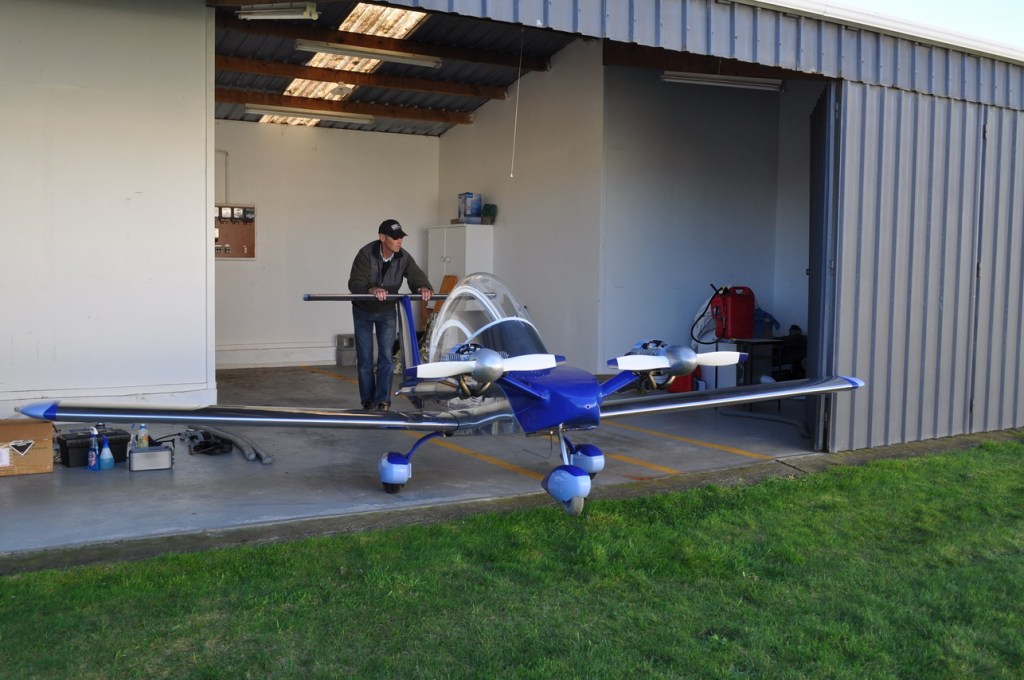
Apart from the Cricri’s extraordinary size for a piloted aircraft, it is a fascinating quirky aircraft with a host of remarkable features:
(1) 34 years since its first flight it is still the worlds smallest twin engined piloted aircraft.
(2) A respectable cruise of 95 – 100 kts
(3) Empty weight of 80 – 85 Kg (180lbs)
(4) Dynamically balanced controls.
(5) Flaps
(6) Brakes
(7) Adjustable rudder pedals
(8) Easily trailered, assembled in minutes
(9) Aerobatic with sustained inverted capability
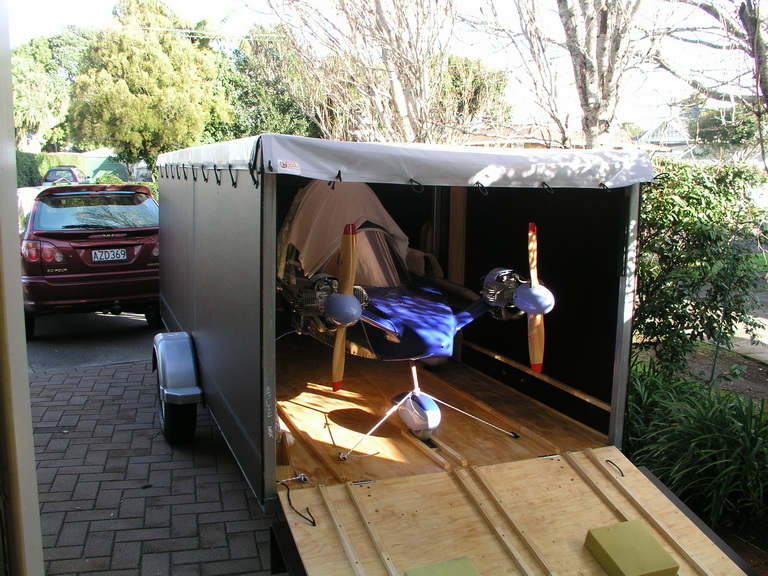
 Wayne Butt Projects